
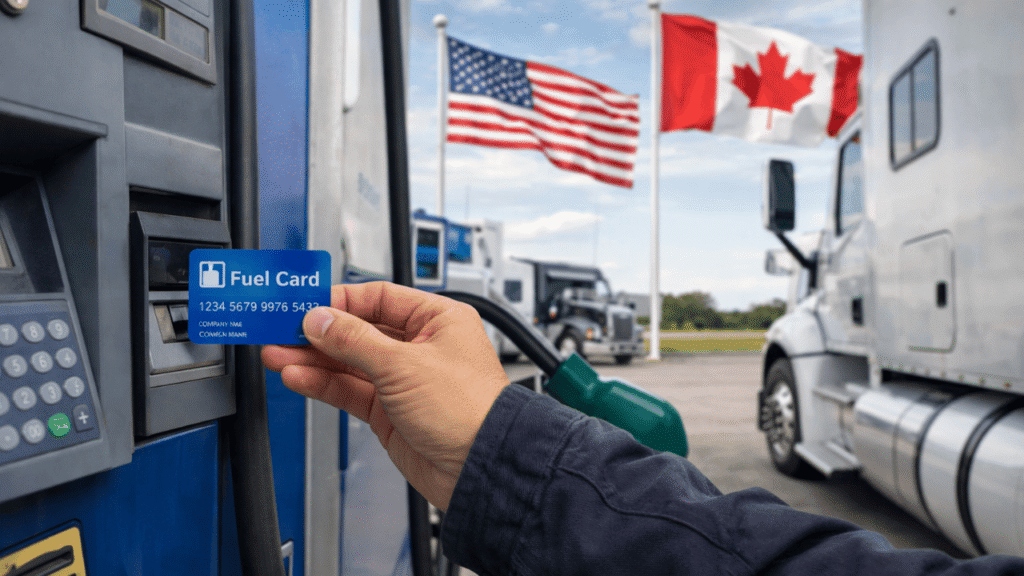
Cross-province trucking comes with unique challenges. Fuel prices shift from one province to the next, station networks vary by region, and keeping track of expenses across multiple jurisdictions can get messy fast. Without the right system in place, those variables eat into your margins.
Using fuel cards across provinces is one of the most effective ways to bring order to that chaos. The right card gives you access to consistent discounts, centralized billing, and real-time spending visibility, no matter which province your drivers are in. But getting the most out of your card means knowing how to use it strategically across regions.
Table of Contents
Understanding How Fuel Cards Work Across Regions
Not all fuel cards are built for cross-province travel. Some are tied to a single fuel brand, which limits where your drivers can fill up. Others operate on open networks accepted at thousands of locations from British Columbia to Nova Scotia.
In Canada, trucking fuel card networks typically fall into two categories. Closed-loop cards are tied to a specific fuel brand, think Petro-Canada SuperPass or the Esso and Mobil Business Card, and only work at that brand’s stations. They can offer strong discounts within their network, but coverage is an issue on routes that pass through areas with few branded locations. Open-loop cards, on the other hand, run on Visa or Mastercard networks and work wherever those cards are accepted, giving drivers far more flexibility.
The key thing to check before committing to a card is network density along your actual routes, not just total station count. A card accepted at 2,000 locations nationwide sounds solid until half of those locations aren’t anywhere near your drivers’ regular corridors.
Benefits of Using Fuel Cards Across Provinces
When you’re managing cross-province fuel purchases, a good fuel card does more than pay for diesel. Here’s where the real value shows up:
- Simplified billing across regions: Instead of collecting receipts from drivers in five different provinces, every transaction flows into a single account. One statement. One payment. That alone saves significant administrative time at the end of each month.
- Better fleet fuel tracking across regions: You can see exactly where each driver fueled up, how much they spent, and what they paid per liter, broken down by province, vehicle, or driver. That level of detail makes it much easier to spot inefficiencies and control costs across a distributed fleet.
- Discounts on diesel purchases for long routes: Many fleet cards offer per-liter discounts that compound quickly on long hauls. Even a few cents per liter adds up to real money when you’re running thousands of kilometers across provinces each month.
- Simplified IFTA reporting: For cross-province operators, International Fuel Tax Agreement reporting is a regular obligation. Fuel card dashboards automatically track fuel purchases by jurisdiction, reducing the time you’d otherwise spend manually pulling records.
Tips for Using Fuel Cards Across Provinces
Getting approved for a card is the easy part. Using it well across provinces takes more intention.
- Plan routes around your fuel network: Before a driver heads out, check that your card has strong coverage along the route, not just in major cities. Use your provider’s station locator app to identify partner stations at regular intervals. Running out of in-network options mid-haul means paying out-of-network fees or the full pump price.
- Use the app to find the best prices: Diesel prices vary meaningfully between provinces due to different fuel taxes. In provinces like British Columbia and Quebec, provincial fuel taxes push up pump prices. A fuel finder app lets drivers compare prices at nearby stations and choose strategically.
- Monitor regional price differences: If a route passes through a lower-tax province, it may make sense for drivers to top up there rather than filling minimally and fueling again at higher-cost locations. Build that regional awareness into your dispatch process.
- Avoid out-of-network fees: These fees quietly erode your fuel savings. Some cards charge a flat transaction fee every time a driver uses an out-of-network station, which adds up fast on long routes. Make sure drivers know which stations are in-network and plan accordingly.
- Set controls before drivers leave: Lock the card to fuel-only purchases, set daily spending caps, and restrict use to specific provinces or regions if needed. Doing this upfront prevents surprises on your statement later.
Managing Fuel Cards for Cross-Province Trucking
Running fuel cards across multiple drivers and vehicles requires more than just handing out cards and hoping for the best.
Assign Cards Per Driver or Vehicle
Individual card assignment makes it easy to trace every transaction back to a specific driver or truck. It also simplifies accountability, if there’s an unusual purchase, you know exactly where to look.
Set Spending Limits and Controls
Most fleet card providers let you configure per-transaction limits, daily maximums, and purchase category restrictions. Use these tools. They prevent both accidental overspending and intentional misuse.
Track Usage in Real Time
Don’t wait for your monthly statement to review fuel spending. Most card dashboards update transactions in real time or within a few hours. Regular check-ins let you catch anomalies early, whether it’s a driver fueling up in the wrong province or a card that may have been compromised.
Integrate with Your Fleet Management System
Many fuel card providers offer integrations with fleet management and ELD software. When your fuel data feeds directly into your operations platform, you get a complete picture of cost per kilometer, fuel efficiency by vehicle, and driver performance, all in one place.
Tools for Fleet Fuel Tracking Across Regions
The right tools make cross-province fuel management significantly easier.
- GPS-integrated fuel tracking ties fuel purchases to specific locations and routes. If a transaction doesn’t line up with where the truck was at that time, you catch it immediately rather than discovering the discrepancy weeks later.
- Fuel card dashboards and analytics give you a centralized view of all spending across your fleet. Look for dashboards that let you filter by province, driver, vehicle, and date range. That flexibility is essential when you’re trying to understand regional cost patterns.
- Expense management software that integrates with your fuel card eliminates the need for your accounting team to manually enter fuel data. Transactions flow directly into your records, making month-end reporting and IFTA filing much less painful.
Make Every Kilometer Count
Using fuel cards across provinces isn’t complicated, but it does require some planning. Choose a card with strong national coverage, set clear controls for your drivers, monitor spending regularly, and use the tracking tools your provider offers. Those habits, done consistently, translate into lower fuel costs, fewer administrative headaches, and better visibility into one of your biggest operating expenses.
The right fuel card provider makes all of this easier. Choose one that understands the realities of Canadian cross-province trucking, not just one that offers a generic fleet card.
Looking for Fuel Cards That Work Across Provinces?
Visit getfuelcard.com, call +1 (905) 901-1601, or email hello@getfuelcard.com to learn how fuel card programs can help your fleet manage fuel purchases across provinces, access diesel discounts, and simplify fuel expense tracking.