
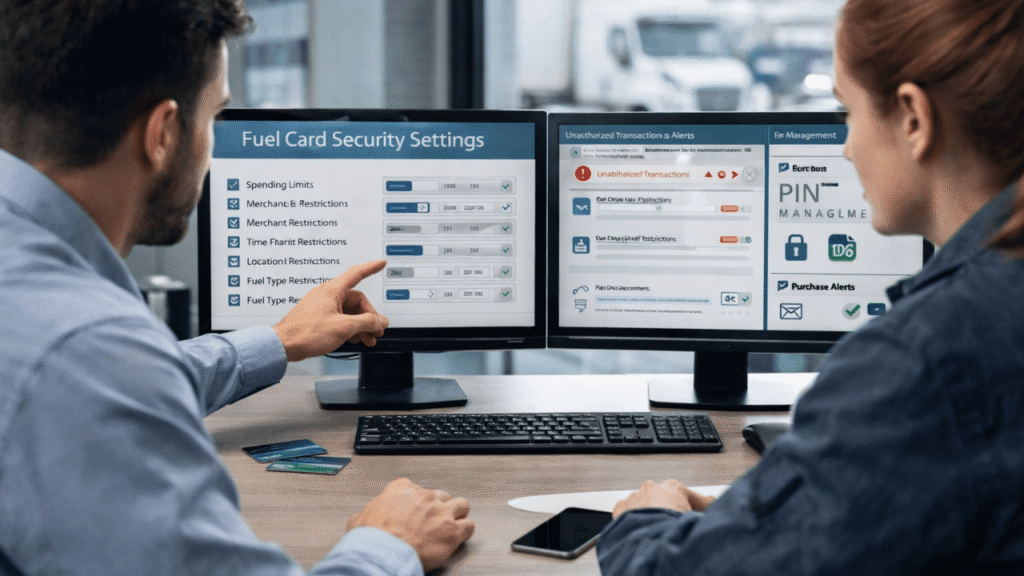
Fuel is one of the biggest operating costs for any fleet, and it’s also one of the easiest places to lose money without realizing it. Every day, stolen cards, unauthorized purchases, and outright fraud quietly drain budgets. That is why fuel card security matters so much. They’re what keep a fleet from spending too much and from losing money without knowing why.
The problem is that most fleets don’t use them consistently. This guide explains all the settings you need to turn on right now to keep your business safe.
Table of Contents
Why You Should Care More About Fuel Card Security Settings
There are more ways for fuel fraud to happen than most managers think. Card skimming at gas stations gets card information without anyone knowing. People who drive add things to transactions without permission. This is known as “transaction padding.” Hackers target weak login credentials to take over accounts. And if no one reports lost or stolen cards right away, they can quickly add up.
If you don’t have the right security settings for your fuel card, all of these risks can happen. Strong security doesn’t just stop fraud; it also holds people accountable, makes things easier to see, and ensures that your entire fuel budget works the way it should.
Essential Fuel Card Security Settings for Fleets
PIN Protection and Driver Authentication
This is the most basic level of security for fuel cards, but many fleets still don’t use it. Every card should have a different PIN to finish a transaction. Even better, give each driver their own ID so that you can keep track of who filled up and when, even if two drivers are using the same car.
Tell drivers to treat their PIN like a bank card number: never share it, never write it on the card, and always cover the keypad when they enter it. As soon as a driver quits your company, deactivate their card and change their login information. It is common and expensive to keep inactive cards alive.
Spending Limits and Transaction Controls
Setting strict spending limits is one of the best ways to stop fuel fraud. Set daily and weekly spending limits based on each vehicle’s actual fuel consumption. A compact car and a semi-truck need very different amounts of fuel, so your limits should show that.
In addition to setting limits on dollar amounts, set limits on how often transactions can happen. Limiting the number of fill-ups per day stops someone from using one card to fill up more than one car without permission. Set a limit on the maximum amount per transaction, so that any purchase over that amount is automatically flagged. These spending limits make it impossible for any one event to cause more damage than a certain amount.
Limits on Merchants and Purchases
Merchant-type locking is one of the least used security settings on fuel cards. Your fuel cards should only work at authorized gas stations. They shouldn’t work at convenience stores, restaurants, or any other store that doesn’t sell gas.
Go a step further by limiting the fuel grade. If your cars run on diesel, only let them buy diesel with the card. Pay-at-pump enforcement adds another layer. With pump-only transactions, there is no in-store purchasing, which keeps the card focused on a single purpose.
Location and Time-Based Restrictions
Adding time and geographic limits to your fleet card protection makes it much better. Limit card use to the areas where your fleet works. If a transaction shows up in a state that your drivers never go through, it’s a big red flag right away, but only if you’ve set the limits to catch it.
Time-of-day limits work in the same way. If your fleet works normal business hours, there is no good reason to buy gas at 2 a.m. Setting time-based limits means that transactions outside business hours won’t go through. This stops one of the most common ways that cards are misused.
Fuel Card Security Features You Must Enable
Real-Time Transaction Monitoring
Real-time monitoring makes fuel card security go from reactive to proactive. You catch fraud as it happens, rather than finding it on a monthly statement. Most modern platforms show every transaction as it happens, including the location, amount, driver ID, fuel type, and timestamp.
Look over this information regularly. At least once a week, and every day when a lot is going on. Look for patterns that don’t seem right, like buying a lot of things in a short period, buying things in strange places, or amounts that don’t match the size of a vehicle’s tank. Regular monitoring catches small problems before they turn into big losses.
Automated Fraud Alerts
Automated alerts do the hard work for you between your manual check-ins. Set up instant alerts for:
- Transactions that go over your spending limits
- Buying things in places that aren’t allowed
- Doing things during limited hours
- Several transactions in a short amount of time
- Buying fuel types that aren’t approved
You don’t have to keep an eye on the dashboard all the time because of these fraud detection tools. The system automatically flags suspicious activity, and you take action right away instead of waiting days to find the problem.
Tank Capacity Controls
Set the maximum number of purchases per card to the vehicle’s actual tank capacity. No single transaction should ever exceed 80 gallons if a vehicle can hold that much. This setting prevents drivers from filling up containers outside of work or using the company card to fill their own cars, which is a common and easy way for fleet fraud to occur.
Regular Security Reviews
You need to keep the security settings on your fuel card up to date, not just set them up once. Set up quarterly reviews to ensure that spending limits still reflect how the vehicle is actually used, that location restrictions still align with current routes, and that every active card belongs to a driver who is still authorized.
You should also change your PINs and account login information often. One of the easiest ways for hackers to gain access to an account is to use stolen credentials. Changing them every so often makes it much harder for them to do so.
Build a Security Culture, Not Just a Policy
Drivers need to know why security settings are important for them to work. Teach your staff how to handle cards correctly, keep their PINs safe, check pumps for skimming devices, and what to do if a card is lost or stolen. Drivers naturally act responsibly when they know their transactions are being watched in real time.
Getting the security settings on your fuel card right is a good first step, but you need the right support to run a fleet that is safe and profitable. Welocity provides professional trucking and fleet services that help operators save money and boost performance at all levels.
Getfuelcard offers professional trucking and fleet-related services designed to help operators protect their budgets and improve performance at every level. Reach out today at getfuelcard.com, call +1 905-901-160, or email at hello@getfuelcard.com. Don’t wait for fraud to find your fleet, lock down your fuel card security settings today.