
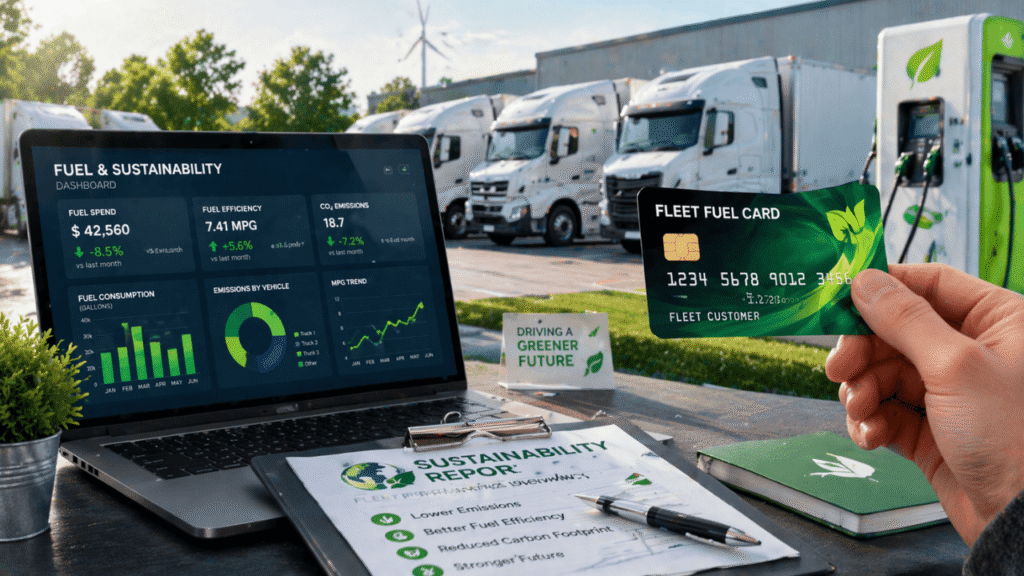
Fleet sustainability is no longer just a buzzword in the trucking world, it’s a business requirement. Regulators are tightening emissions standards, clients want greener supply chains, and fuel costs keep climbing. If you manage a fleet, you’re under pressure from every direction.
Most fleet managers don’t know this: fuel cards help fleets become more environmentally friendly in ways other than just saving money at the pump. You can get the information, controls, and reporting tools you need to run a cleaner, smarter, and more efficient fleet with modern fuel cards.
Let’s talk about how to do it
Table of Contents
How Fuel Cards Support Fleet Sustainability
The first step toward sustainability is to be able to see things. The first thing that fuel cards help with is that you can’t cut back on something you can’t measure.
Every time a driver uses the pump, it provides you with more information about how the fleet operates. This system lets managers see how often vehicles are filled up, when they go off course, and when they buy things they shouldn’t. This information shows you the patterns that slowly eat away at your fuel budget and raise your emissions over time.
Modern fuel cards provide operational data, make your job easier, and support sustainability. In fact, 95% of fleet managers say that fuel cards provide them with useful information to run their businesses. There are a lot of people. Most people agree that these tools are useful.
When you have real data on every gallon you buy, you stop guessing and start making choices. That change is what makes eco-friendly fleet management work.
Fuel Efficiency Tracking: Where the Savings Begin
One of the most direct ways fuel cards help fleets become more environmentally friendly is by tracking how much fuel they use. Every transaction is automatically recorded, including the time, location, volume, and type of fuel.
Fuel cards provide a lot of information about your purchases, so you can see how you buy and use fuel over time. Fleet managers can use fuel card data and other telematics data to identify theft, misuse, and other ways to manage fuel better.
This is important because tracking fuel use at the driver level shows who is using too much fuel, which routes use the most diesel, and which vehicles aren’t performing as well as they should. You wouldn’t know about these problems until they became a budget issue if you didn’t have a fuel card. You catch them early and do something with one.
Fuel costs typically account for 60% of a fleet’s total operating costs. Getting the most out of fuel efficiency lowers costs, carbon emissions, and profits. Not only is cutting back on consumption good for the environment, but it’s also good for business.
Fleet Emissions Reduction Through Smarter Controls
Fuel cards not only keep track of how much you spend, but they also help you save money. Most new cards let you set spending limits that keep you from wasting money before it happens.
Businesses can set limits on purchases based on the time of day, day of the week, where the purchase is made, how much money is spent, what kind of fuel is used, and how much fuel is needed. Fleet managers can only let people buy diesel or set daily spending limits.
Those controls help lower fleet emissions right away. When drivers can’t fill up their own cars or others’ cars, they use less gas overall. It’s that easy: less fuel burned means less pollution.
Fleet gas card companies are responding to the trend toward sustainability by offering businesses options that help them achieve their environmental goals, such as tracking and reporting carbon emissions. This gives businesses the ability to make environmentally friendly choices about how to manage their fuel.
For environmental compliance, tracking your carbon footprint is becoming increasingly important. The EPA is making emissions standards stricter for commercial vehicles. If you keep track of your fuel and emissions data, you’ll be ahead of the game instead of having to catch up.
Building Eco Driving Habits With Data
Fuel cards do a better job of tracking driver behavior than they should. You can’t make your fleet last if you don’t pay attention to how your drivers really drive.
Driving too fast, too aggressively, or for too long all use more gas. You can watch how drivers act in real time with telematics systems and give them feedback to help them stop doing these bad things. Fuel card data goes straight into this picture.
Drivers are more likely to act responsibly when they know that their fueling habits are being watched, such as how often they fill up, how much gas they use, and whether their purchases match their route. Over time, these “eco driving habits” add up. A driver who idles less, speeds up smoothly, and stays on the road uses a lot less gas over the course of a year.
Businesses can significantly reduce their carbon footprint by promoting eco-friendly driving habits and optimizing fuel use. Even small changes in fuel efficiency can have a big impact on greenhouse gas emissions.
Sustainability Metrics and Reporting for the Long Game
You can’t just fix fleet sustainability once and be done with it. It’s a long-term commitment, so you need reliable sustainability metrics to track progress and keep stakeholders informed.
Fuel cards make this easy. You can set up or modify automated reports to show trends such as rising gas prices, drivers who aren’t performing well, or regional inefficiencies. This makes it easier to plan budgets and do internal audits.
The story gets even more interesting for fleets that are going electric. Fuel cards are a big part of the push to make things more sustainable and switch to electric cars. Some cards now let you use public EV charging networks and support charging EVs at home.
This means your fuel card plan can change as your fleet evolves. The right card will help you keep your sustainability metrics steady and easy to report, whether you drive a traditional truck now or switch to electric vehicles (EVs).
Ready to Build a Greener Fleet?
Fuel cards improve fleet sustainability by turning every pump stop into usable data, every purchase into an accountable transaction, and every report into an opportunity to improve. They help you reduce waste, lower emissions, build better driver habits, and stay compliant with tightening regulations.
Fleets that use fuel cards for more than just paying for gas can achieve their green goals while saving money. The fuel card is one of the easiest and most effective ways to improve your trucking business’s environmental impact if you really want to.
Visit getfuelcard.com, call +1 (905) 901-1601, or email hello@getfuelcard.com to find out about fleet and fuel management solutions that can help you reach your goals for sustainability.