
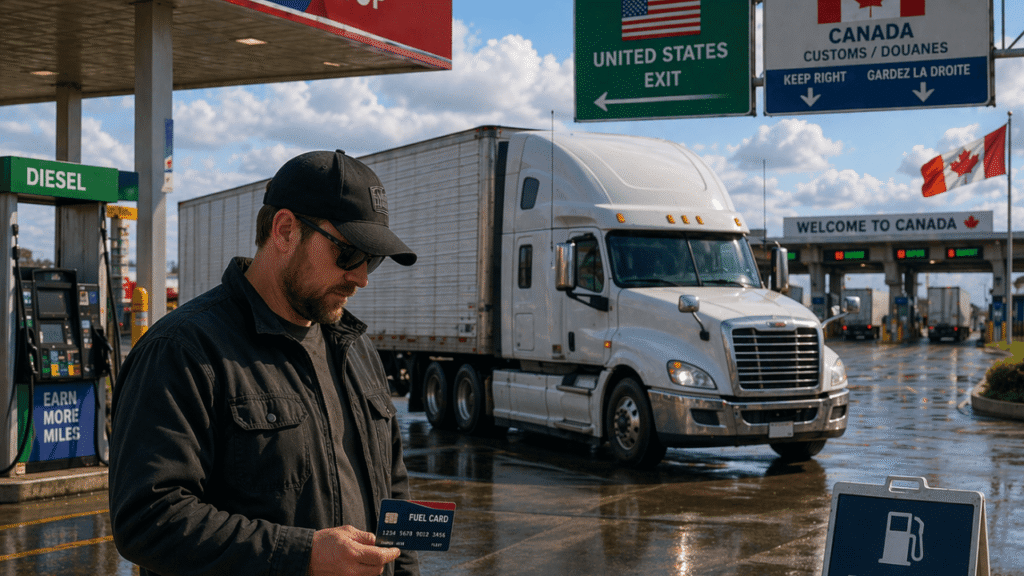
Trucking companies can quickly run into trouble when they buy fuel in multiple countries. Drivers have to deal with different currencies, constantly changing tax rules, and payment systems that don’t always work the same way everywhere. That’s why many cross-border fleets use fuel cards. They make it easier to track fuel purchases and give businesses greater control over their spending.
Drivers also have to stop at stations they don’t know about when they cross borders. Without a clear way to pay, they might have to deal with cash, multiple cards, or on-the-spot currency exchanges. Fuel cards make it easier and more reliable for drivers to pay for gas, no matter where they are on their route.
Fuel card systems make payments easier and include detailed reporting tools that help track fleet expenses, file taxes, and oversee operations. These features make fuel management easier and more efficient for fleets operating in multiple countries.
Table of Contents
What Are Fuel Cards for Cross-Border Fleets?
When you have a fuel card for an international fleet, it’s much easier to fill up in other countries. Drivers can use one card at a network of approved gas stations, avoiding the need to use a different payment method in each area. That makes things easier on the road and saves time at the gas station.
Because all transactions go through a single billing system, it also makes it easier to handle fuel payments across borders. Fleet managers can view purchases from different countries in a single report. This makes it easier to keep track of spending and keep records in order.
The built-in transaction detail is another benefit. Fuel cards automatically record important details, such as the purchase location, the amount of fuel purchased, and the transaction time. That gives fleets good records for everyday business and bookkeeping.
This kind of setup gives companies that operate international routes a clearer view of fuel costs and reduces the paperwork that usually comes with tracking them across borders.
Why Fuel Cards Matter in International Trucking
When fleets operate across multiple countries, managing fuel becomes much more difficult. Fuel cards make this process easier and help international trucking run more smoothly.
Some of the main benefits are:
- Easier fuel payments between countries: Drivers can buy gas without dealing with cash or other payment methods.
- Improved fleet expense tracking: Centralized reports show all fuel purchases, making accounting easier.
- Better operational visibility: Managers can see how fuel is used across different routes and areas.
- More efficient trucking logistics: Fuel networks help drivers find approved gas stations along international routes.
- Reduced administrative workload: Automated reporting reduces paperwork and manual data entry.
Fuel costs account for 20–40% of a trucking business’s operating expenses. So, good fuel management is very important for staying profitable, especially for fleets that work in other countries.
How Fuel Cards Help Cross-Border Trucking Fleets
Fuel cards come with several tools that make it easier to keep track of and manage fuel across borders.
Cross-Border Fuel Purchases
Drivers can fill up at gas stations in participating countries without worrying about how to pay. Each transaction is automatically recorded, making sure that cross-border fuel purchases are accurately documented.
This system makes things easier and means that drivers don’t have to deal with receipts by hand as much.
Currency Exchange Handling
Handling different currencies is one of the hardest parts of international shipping. Many fuel card programs automatically handle currency exchange by turning transactions into a standard billing format.
This means that drivers don’t have to deal with changing exchange rates or cash exchanges.
Real-Time Fleet Expense Tracking
Fuel card systems provide real-time information to help you track your fleet’s expenses. Fleet managers can view transactions across different countries, track spending, and quickly spot unusual behavior.
These insights help fleets better track their money.
International Route Planning
Many companies that sell fuel cards have big networks that cover more than one country. This helps fleet managers plan international routes more effectively by ensuring drivers can always access fuel along major transport routes.
Benefits of Fuel Cards for International Fleet Operations
Fuel cards offer several advantages that improve operational efficiency and financial control for global fleets.
Key benefits include:
- Improved fuel tax compliance: Detailed fuel transaction data simplifies tax tracking across jurisdictions.
- Simplified fleet tax reporting: Fuel card reports provide accurate documentation required for international tax filings.
- Centralized expense management: All fuel spending appears in a single reporting system, improving financial visibility.
- Better trucking operations management: Data insights help managers monitor routes, fuel consumption, and operational performance.
For companies operating internationally, these capabilities help reduce administrative complexity while improving operational transparency.
Best Practices for Managing Fuel in Cross-Border Fleets
To maximize the benefits of fuel cards, fleets should combine them with strong operational practices.
Choose Fuel Cards With Broad Network Coverage
Make sure the card works in the areas where your fleet works. Drivers have more options for filling up on international routes when network coverage is wider.
Monitor Cross-Border Fuel Spending
Look at fuel reports often to see how much money is being spent on different routes or in different areas. Keeping an eye on spending helps spot unusual transactions early.
Maintain Accurate Fleet Tax Reporting
Fuel card transaction records make it easier to report fleet taxes by giving detailed records of where and when fuel was bought.
Plan Routes Around Fuel Networks
Good international route planning ensures drivers can easily reach approved fueling stations without unnecessary detours.
Integrate Fuel Data With Fleet Systems
Linking fuel card data with fleet management software gives you a better picture of how things are going and helps you make better decisions overall.
Common Challenges in Cross-Border Fleet Fuel Management
There are many problems associated with managing fuel internationally. It’s hard to keep accurate financial records when the currency, tax rules, and reporting methods differ.
When fleets use manual receipts or multiple payment systems, it can be hard to track fuel costs across different areas.
Another problem is making sure that international fuel tax rules are followed. Fleets may struggle to meet reporting requirements if they don’t maintain good records.
Fuel cards solve many of these problems by consolidating all transactions into a single system. Automated reporting, centralized billing, and detailed transaction logs help fleets better track their fuel management.
Simplifying International Fuel Management With Fuel Cards
Managing fuel is an important part of running a successful global fleet. When fleets operate across multiple countries, it becomes harder to track payments, expenses, and compliance.
This is where fuel cards for cross-border fleets really shine. Fuel cards make it easier for fleets to run smoothly in many countries by streamlining fuel payments, automating transaction tracking, and enabling international tax reporting.
Fleets can better control costs while keeping operations running smoothly across borders by improving visibility into fuel spending and operational oversight.
Make the most of your cross-border fleet’s fuel management today.
Want to see how much fuel your fleet is spending across borders and have more control over fuel costs?
Visit getfuelcard.com, call +1 (905) 901-1601, or email hello@getfuelcard.com to find out how fuel card solutions can help your fleet make international fuel payments easier, keep better track of expenses, and run more smoothly across borders.