
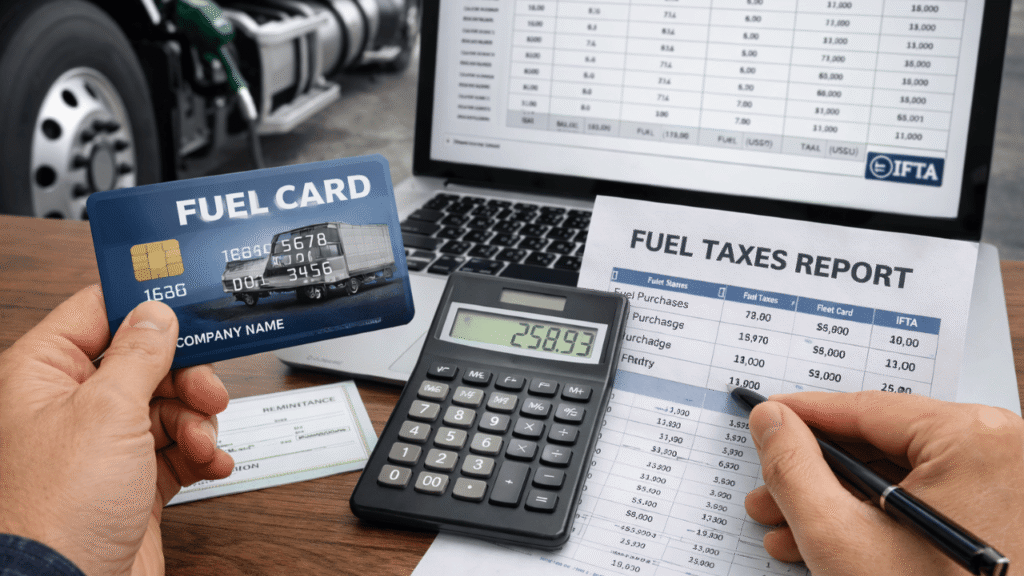
Fuel taxes are an unavoidable part of operating a trucking business. For fleets that travel across multiple states or provinces, managing fuel tax reporting can quickly become complicated. That’s why many companies rely on fuel taxes with fleet cards to simplify tracking and reporting.
Fuel cards don’t just make diesel payments easier, they also record purchase data automatically. This information can be extremely valuable when preparing tax reports or handling cross-border compliance. By using fuel taxes with fleet cards, fleet managers gain better visibility into fuel purchases and more accurate tax reporting.
In this guide, we’ll explore how fuel taxes with fleet cards work, how they help fleets stay compliant, and why they are increasingly important for trucking companies.
Table of Contents
Fuel Taxes With Fleet Cards: What Fleets Need to Know
Understanding fuel taxes with fleet cards starts with knowing how diesel purchases are tracked. Every time a driver buys fuel using a fleet card, the transaction is recorded with details such as location, time, and fuel volume.
These records make trucking fuel tax management significantly easier. Instead of collecting paper receipts from drivers, fleet managers can access centralized reports showing fuel purchases across all vehicles.
For companies operating in multiple jurisdictions, this digital recordkeeping enables reliable tracking of taxable fuel usage.
Why Fuel Taxes Matter for Trucking Companies
Fuel taxes support road maintenance and transportation infrastructure. Trucking companies must report how much fuel they purchase and where it is used.
Without proper documentation, tax reporting can become difficult and time-consuming. That’s where fleet cards help simplify the process.
Because each transaction is recorded automatically, fleets can maintain more accurate data for compliance purposes.
How to Manage Fuel Taxes With Fleet Cards
Knowing how to manage fuel taxes with fleet cards is essential for fleets that want to reduce administrative workload and improve reporting accuracy.
Automated Fleet Fuel Tax Tracking
Fleet cards simplify tax preparation by supporting fleet fuel tax tracking through digital reporting systems. These reports typically include:
- Fuel purchase location
- Fuel quantity purchased
- Date and time of transaction
- Vehicle or driver identification
This information helps fleet managers organize fuel data quickly when preparing tax reports.
Instead of sorting through receipts, managers can export reports directly from the fuel card system.
Simplifying Tax Preparation
Using fuel taxes with fleet cards allows fleets to maintain accurate fuel purchase records throughout the year. This makes it easier to prepare documentation during tax filing periods.
Many modern fleet card platforms integrate with accounting or fleet management software, further streamlining reporting.
As a result, fleet managers spend less time gathering information and more time focusing on operational improvements.
Handling IFTA Fuel Taxes With Fuel Cards
One of the biggest benefits of fleet cards is how they help companies handle multi-jurisdiction fuel taxes. This is particularly important for fleets operating under the International Fuel Tax Agreement (IFTA).
Understanding how to handle IFTA fuel taxes with fuel cards can help trucking companies simplify compliance.
What Is IFTA?
The International Fuel Tax Agreement requires carriers operating across participating jurisdictions to report fuel usage and mileage traveled in each region.
Without proper records, calculating these taxes can be extremely difficult. That’s why IFTA fuel tax reporting relies heavily on accurate fuel purchase data.
Fleet cards provide the detailed transaction history needed to support these reports.
Using Fuel Tax Reporting Tools
Many fuel card providers include built-in fuel tax reporting tools designed specifically for trucking companies.
These tools generate reports that show:
- Fuel purchases by jurisdiction
- Total gallons purchased
- Transaction locations
- Historical fuel usage patterns
With these insights, fleets can complete tax filings more quickly and accurately.
Managing Diesel Fuel Tax Records
Maintaining accurate diesel fuel tax records is essential for avoiding compliance issues. Fleet cards automatically store transaction data, which reduces the risk of missing or incomplete records.
Digital reporting systems also make it easier to access past fuel transactions if documentation is required during audits or regulatory reviews.
Benefits of Using Fleet Cards for Fuel Tax Reporting
Fleet cards offer several advantages for managing fuel taxes, especially for companies operating on long-haul routes.
Reduced Administrative Work
Manual recordkeeping requires collecting receipts from drivers, organizing purchase data, and calculating fuel usage across jurisdictions. Fleet cards automate much of this process.
Transaction data is recorded instantly and stored digitally, allowing fleet managers to access accurate information whenever needed.
Improved Accuracy
Human errors often occur when handling fuel receipts manually. Fleet card reporting tools reduce these risks by automatically recording transactions.
Accurate data improves tax reporting reliability and reduces compliance concerns.
Better Operational Insights
Beyond tax reporting, fuel card data can also help fleets analyze fueling patterns and optimize routes.
Understanding where and when drivers purchase fuel helps companies make better decisions about fueling strategies.
Why Fleet Cards Are Valuable for Fuel Tax Compliance
Fuel taxes can become complex for trucking companies operating across multiple jurisdictions. By using fuel taxes with fleet cards, fleets gain access to tools that simplify fuel tracking, improve reporting accuracy, and support regulatory compliance.
Automated transaction records, integrated reporting tools, and digital storage systems help fleets maintain accurate fuel tax documentation throughout the year.
This level of organization not only simplifies tax filing but also strengthens financial oversight within fleet operations.
Simplify Fuel Tax Reporting With the Right Fuel Card
Handling fuel taxes doesn’t have to be complicated. By using fuel taxes with fleet cards, trucking companies can track fuel purchases automatically and generate accurate reports for tax compliance.
Fleet cards help reduce paperwork, improve reporting accuracy, and simplify the process of managing fuel taxes across multiple jurisdictions.
Looking for a Fuel Card That Simplifies Tax Reporting?
Visit getfuelcard.com, call +1 (905) 901-1601, or email hello@getfuelcard.com to explore fuel card solutions designed for trucking fleets and owner-operators. The right fuel card can help you track fuel purchases, simplify tax reporting, and manage fleet fuel expenses more efficiently.