
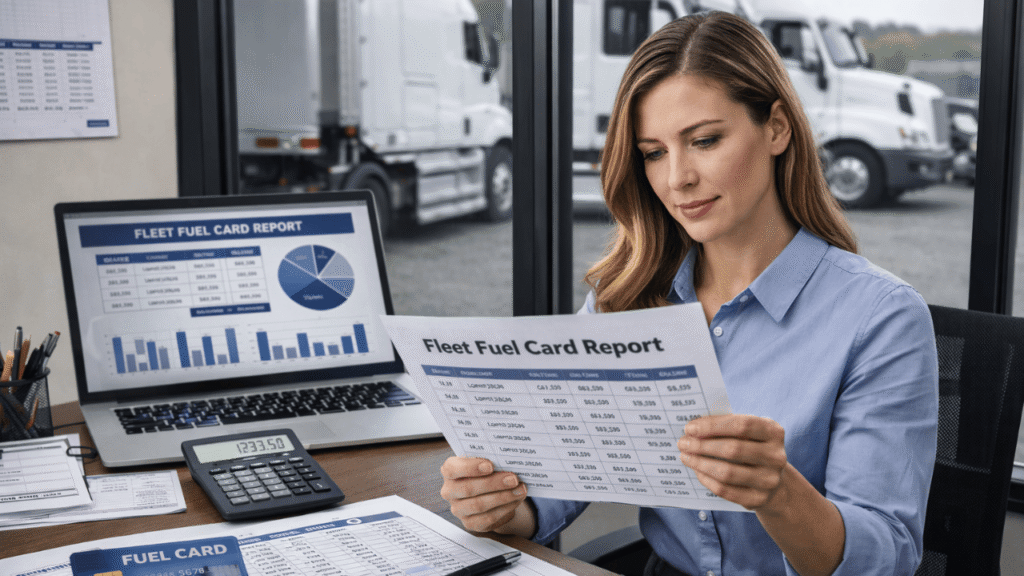
Fuel expenses are among the largest operational costs for trucking companies. Without proper tracking, fleets can quickly lose visibility into how their fuel money is being spent. This is where fuel card reports become essential for modern fleet management.
By using fuel card reports, fleet managers can access detailed data on fuel purchases, driver behavior, and fueling locations. Instead of relying on paper receipts or manual logs, fleets can monitor spending through centralized digital dashboards.
For companies looking to improve cost control, fuel card reports provide valuable insights that help identify inefficiencies and reduce unnecessary expenses. In this guide, we’ll explore how fleets use reporting tools to track fuel spending and improve operational efficiency.
Table of Contents
Fuel Card Reports for Fleet Fuel Monitoring
One of the most valuable uses of fuel card reports is supporting effective fleet fuel monitoring. These reports collect transaction data from every fuel purchase made using a fleet card.
Fleet managers can view information such as:
- Fuel purchase location
- Date and time of the transaction
- Fuel quantity purchased
- Driver or vehicle identification
This level of transparency helps companies monitor diesel purchases across their entire fleet.
Why Monitoring Fuel Purchases Matters
Fuel costs fluctuate frequently, making it important for fleets to closely track spending. Without proper monitoring, it becomes difficult to identify inefficiencies or unusual purchasing patterns.
With fuel card reports, managers can quickly detect irregularities such as:
- Drivers fueling at higher-cost locations
- Unexpected fuel consumption levels
- Duplicate or suspicious transactions
By maintaining clear fleet fuel monitoring, companies can prevent unnecessary fuel expenses and maintain better financial control.
How to Track Fuel Spend With Fuel Card Reports
Understanding how to track fuel spend with fuel card reports allows fleet managers to turn raw fuel data into actionable insights.
Using Diesel Purchase Tracking
One key feature of modern reporting tools is diesel purchase tracking. This allows managers to review every fueling transaction in detail.
Reports typically show:
- Fuel volume purchased per vehicle
- Total fuel spending by driver
- Frequency of fueling stops
- Locations where fuel was purchased
This information makes it easier to identify trends that affect fuel efficiency and operating costs.
Analyzing Fuel Consumption Patterns
Another benefit of fuel card reports is the ability to analyze fuel consumption patterns across vehicles. For example, if one truck consistently consumes more fuel than others on similar routes, there may be maintenance issues or inefficient driving practices at play.
Identifying these patterns helps fleets address problems before they become costly.
Benefits of Fuel Card Reporting for Fleets
Beyond basic tracking, understanding the benefits of fuel card reporting for fleets can help companies improve overall fuel management strategies.
Fuel Spending Analytics for Better Decisions
Modern fuel card platforms often include fuel spending analytics that transform transaction data into visual reports and dashboards.
These analytics tools allow fleet managers to:
- Compare fuel usage between vehicles
- Identify high-cost fueling locations
- Track fuel spending trends over time
With better insights, companies can make data-driven decisions about route planning and fueling strategies.
Access to Fleet Fuel Expense Reports
Detailed fleet fuel expense reports help accounting teams manage operational costs more efficiently. Instead of sorting through individual receipts, companies can generate reports summarizing fuel spending across the fleet.
These reports are especially useful for:
- Budget planning
- Tax documentation
- Financial forecasting
Having centralized data improves both accuracy and efficiency.
Improving Trucking Fuel Tracking
Accurate trucking fuel tracking is essential to controlling fuel expenses. Fuel card reporting systems simplify this process by automatically recording every purchase.
Drivers no longer need to submit paper receipts or manually log fuel purchases. Instead, transactions are recorded instantly and stored digitally.
This automation reduces administrative work while improving reporting accuracy.
Additional Insights From Fuel Card Data
While many fleets initially adopt reporting tools for expense tracking, fuel card reports can provide much deeper operational insights.
For example, fuel data can reveal:
- Which routes require the most fuel consumption
- Which drivers consistently refuel at higher-cost stations
- How fuel costs change across different regions
These insights help fleets optimize routes, strategically plan fueling stops, and reduce overall operating costs.
Over time, using fuel card data strategically can lead to significant cost savings.
Why Fuel Card Reporting Improves Fleet Efficiency
The trucking industry operates on tight profit margins, making fuel management a critical factor in financial performance. Fuel card reports provide the data needed to maintain control over one of the most significant operational expenses.
With detailed reporting tools, fleets can monitor fuel purchases, analyze consumption patterns, and identify inefficiencies faster than ever before.
This level of transparency allows companies to make smarter decisions about fueling strategies and fleet operations.
Gain Better Visibility Into Your Fuel Spending
Fuel tracking is essential for controlling operational costs in the trucking industry. By using fuel card reports, fleets can monitor fuel purchases, generate accurate spending reports, and uncover opportunities to improve efficiency.
These insights help trucking companies manage fuel expenses more effectively while maintaining better oversight of driver fueling behavior.
Looking for Fuel Card Reporting Tools?
Visit getfuelcard.com, call +1 (905) 901-1601, or email hello@getfuelcard.com to explore fuel card solutions that provide detailed reporting, fuel tracking tools, and access to fuel discounts. The right fuel card program can help your fleet monitor spending and optimize fuel management with greater confidence.