
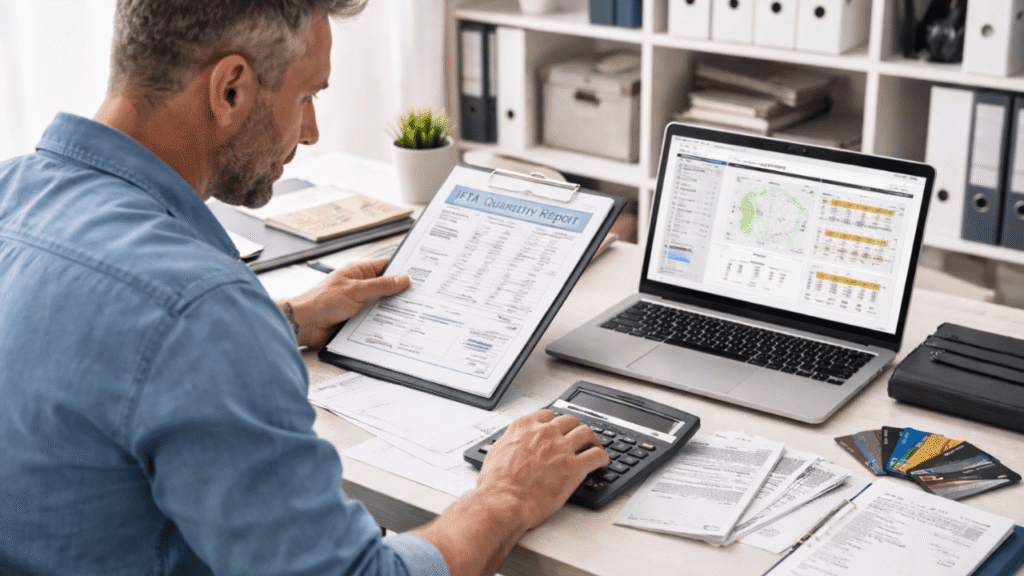
If you run a trucking fleet that goes across state lines, you have to file IFTA reports every three months. If you’ve been doing it by hand, you know how boring it can be. Keeping track of fuel purchases, logging miles by jurisdiction, and matching receipts to routes all add up to hours of administrative work every quarter. One mistake can lead to an audit or a fine.
That’s where fuel cards for IFTA reporting come in and change everything. Fuel cards automatically collect all the information and put it in a format that’s ready to file, so you don’t have to chase down paper receipts and enter data into spreadsheets. This is what you need to know.
Table of Contents
What is the International Fuel Tax Agreement (IFTA)?
The IFTA is an agreement between the lower 48 U.S. states and 10 Canadian provinces that makes it easier for interstate commercial motor carriers to collect fuel taxes and report on their fuel use in multiple jurisdictions.
Before IFTA, truckers had to get separate fuel permits for each state they drove through. You now register with your base jurisdiction, which is the state where your fleet works, and file one report every three months there. Your base state then sends the tax money to all the other states you drove through.
One of the best things about IFTA is that it lets businesses with fleets spend less time and money filing multiple reports to multiple jurisdictions. Instead, they only have to file one report and make any payments owed to their base jurisdiction, which then sends the money where it needs to go.
What Kinds of Vehicles Need an IFTA License?
Not all commercial vehicles need IFTA credentials. A qualified motor vehicle is a truck with three or more axles or two axles and a gross vehicle weight of more than 26,000 pounds that is used to move people or goods across more than one jurisdiction.
The deadlines for filing every three months are April 30, July 31, October 31, and January 31. Late filings cost money. The penalties start at $50 or 10% of the total tax owed, whichever is higher. You also have to pay 1% interest on the taxes that are late. Not meeting a deadline isn’t just a hassle; it’s a cost that can be avoided.
How Fuel Cards Make IFTA Reporting Easier
Most of the problems with fleet compliance come from having to do IFTA fuel tracking by hand. Drivers forget to turn in receipts, paper records fade, and mistakes in data entry add up. Fuel cards fix all of this at the source.
Automatic Data Capture at Every Fill-Up
Fuel cards make it much easier to report IFTA because they keep track of how many miles you drive and how many gallons you buy in each state. Some fuel cards even come with a special IFTA report that organizes this information so you can easily copy and paste it into the IFTA report.
Automatic Data Capture at Every Fill-Up
Real-time logging of every transaction includes the date, time, location, type of fuel, gallons bought, and vehicle number. No need to enter anything by hand. There are no missing receipts. The data is always there when you need it.
GPS and ELD Integration for Mileage Tracking
IFTA needs more than just fuel purchase data; it also needs accurate mileage by jurisdiction. IFTA reporting software works with fuel cards, GPS tracking systems, and driver logs to make data collection easier and reduce the need for manual data entry. This gives fleet managers more time to focus on their main tasks.
This mix of mileage tracking and fuel data makes a full record that is ready for an audit without anyone having to write anything down. When your miles and fuel purchases are both recorded automatically and checked against each other, the chance of mistakes goes down a lot.
Ready-to-File IFTA Reports
Integrating fuel cards is the best way to quickly and easily report IFTA because they automatically add information like location, gallons, total cost, and date and time of each fuel purchase to the IFTA report.
Most fuel cards and GPS providers work well with solutions. They automatically handle IFTA reports and use routing technology to recreate real travel routes and meet audit requirements. It used to take hours to put together by hand, but now it only takes minutes to pull and submit.
Fuel Cards for IFTA Reporting Key Benefits
- Eliminates paper receipt management — Tax authorities accept digital transaction records from fuel cards as official tax documentation. You don’t have to sort through a shoebox of receipts at the end of the quarter because everything is stored and searchable in your online account.
- Lessens the risk of an audit — State auditors are much less likely to raise red flags when they see clean, consistent data with no gaps or mistakes made by hand. Importing fuel card data directly gets rid of the chance of problems like missing paperwork, mistakes, or paying too much.
- Makes tax calculations more accurate — Fleet accounting software linked to your fuel card figures out how much you owe to each state and how much you should get back from states with lower taxes. This keeps you from paying too much and makes sure you get all the refunds you’re owed.
- Helps fleets stay compliant in all jurisdictions — The fuel card reporting dashboard lets you group purchases by state and vehicle for easy IFTA filing and keep track of refundable gallons used in off-road equipment. IFTA needs this jurisdiction fuel data to be set up in a certain way.
- Saves time every three months — By pulling data from your fleet’s telematics system and combining it with fuel card transactions, you can automate IFTA reporting and create a filing document that is ready to be uploaded. This could save you thousands of dollars in taxes and hours of administrative work.
Make IFTA Filing the Easy Part of Your Quarter
Fuel cards for IFTA reporting make one of the most time-consuming parts of fleet tax reporting mostly automatic. You don’t have to spend days gathering receipts and checking mileage logs before each quarterly deadline. Your data is already organized, checked, and ready to be sent in.
If you run a fleet that goes across state lines, getting a good fuel card and built-in tax reporting tools is one of the smartest things you can do for your business. It keeps you from getting in trouble, lowers your chances of being audited, and gives your team back hours every quarter that they can use to run the business better.
Visit getfuelcard.com, call +1 (905) 901-1601, or email hello@getfuelcard.com to learn how fuel card solutions can help your fleet streamline fuel cards for IFTA reporting and improve overall fuel management.