
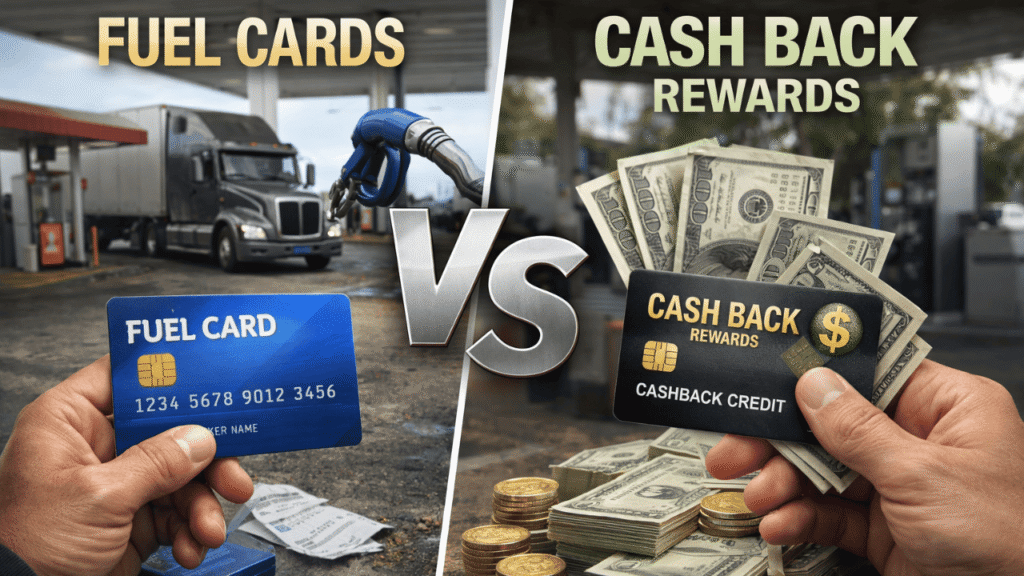
Fuel is one of the biggest expenses in trucking, so the way you pay for it matters more than most drivers realize. Many truckers and fleet managers compare fuel cards vs cash back rewards to figure out which option actually saves more money.
Both payment methods offer benefits, but they work very differently. Fuel cards focus on upfront savings and fuel management, while cash back cards reward you after you spend. Understanding this difference can help you choose the option that fits your operation.
Table of Contents
Fuel Cards vs Cash Back Rewards: How They Work
When comparing fuel cards vs cash back rewards, the biggest difference comes down to how and when you save money.
Fuel cards provide instant discounts at the pump through partner fuel networks. On the other hand, cash back credit cards return a small percentage of your spending later as rewards.
Understanding Trucking Fuel Payment Options
Trucking companies typically use three main payment methods: fuel cards, credit cards, and cash. Each option has its place, but not all of them support efficient fuel management.
Fuel cards are designed specifically for fleets. They include tools for tracking purchases, setting spending limits, and managing drivers. Regular credit cards are more general and focus on convenience rather than operational control.
How Fuel Cards Work
Fuel cards allow drivers to purchase diesel at participating stations at discounted prices. These discounts apply immediately, helping reduce fuel costs at the point of purchase.
Most fuel card programs also include:
- Real-time transaction tracking
- Driver spending controls
- Detailed fuel reports
These features give fleet managers better visibility and control over fuel expenses.
How Cash Back Credit Cards Work
Cash back credit cards give drivers a small percentage of their fuel spending back as rewards. Over time, those rewards accumulate and are usually applied as statement credits or cash.
That can sound attractive at first, but the savings only show up after you make the purchase. They do not lower your fuel price at the pump. These cards also do not give fleets the tools they need to track fuel activity closely or manage spending across multiple drivers.
Key Differences Between Fuel Cards and Cash Back Cards
Understanding the core differences helps you make a smarter decision:
Fuel Cards
- Offer direct diesel discounts
- Provide detailed fuel reports
- Include driver spending controls
- Built for fleet operations
Cash Back Credit Cards
- Offer percentage-based rewards
- Provide flexible spending options
- Limited fuel tracking capabilities
- Designed for general use
Which Option Delivers Better Value?
Choosing between fuel cards vs cash back rewards depends on how your business operates.
Fuel Cards for Fleet Efficiency
Fuel cards work best for fleets managing multiple trucks. They make it easier to monitor fuel usage, control spending, and reduce unnecessary costs. With built-in reporting tools, fleet managers can quickly identify patterns and improve budgeting. These features support better trucking expense management and long-term cost control.
Cash Back Cards for Simplicity
Cash back cards may suit owner-operators who prefer a simple setup. You earn rewards without dealing with fuel networks or program rules. However, the trade-off is limited visibility and fewer tools to manage fuel spending.
Smarter Ways to Maximize Fuel Savings
Many fleets go beyond just choosing a payment method. They combine strategies like:
- Using discounted fuel networks
- Planning routes around lower-cost stations
- Monitoring driver fueling behavior
When fleets use these strategies alongside fuel cards, they often achieve more consistent savings than when relying solely on cashback rewards.
Why Many Fleets Prefer Fuel Cards
Fuel cards do more than help fleets save money on fuel. They also make it easier to stay organized and keep spending under control. With better tracking, detailed reporting, and built-in spending limits, companies can manage fuel costs much more effectively.
That extra control is a major reason many transportation companies choose fuel cards over traditional credit cards.
Choosing the Right Fuel Payment Solution
The best option depends on your operation size and goals.
- Fuel cards are ideal for fleets that need control, reporting, and consistent savings
- Cash back cards work for smaller operations that value simplicity
By understanding the differences between fuel cards vs cash back rewards, you can choose a solution that supports both your daily operations and long-term profitability.
Find the Best Fuel Payment Solution for Your Fleet
Managing fuel costs well plays a big role in keeping a trucking business profitable. The payment method you choose can affect how much you spend over time and how easily you control those costs. Fuel cards often deliver better long-term value because they offer direct discounts, useful tracking tools, and spending controls tailored to fleet operations.
If you’re exploring fuel card options, compare providers carefully and choose one that aligns with your routes, fuel usage, and business goals.
Looking for Fuel Card Discounts and Fueling Networks?
Visit getfuelcard.com, call +1 (905) 901-1601, or email hello@getfuelcard.com to explore fuel card programs that connect drivers with discounted fuel networks and smarter fuel management tools. The right fuel card can help you find better fuel station discounts and manage diesel expenses more effectively.