
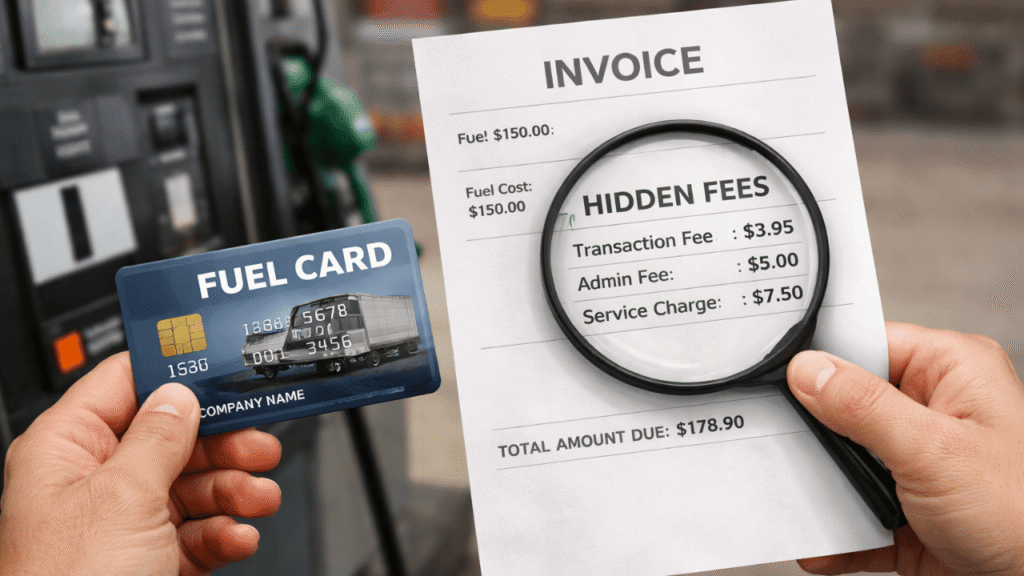
Fuel cards help trucking companies manage fuel purchases, track spending, and simplify reporting. On paper, they often look like a smart way to save money and stay organized. But not every cost is obvious at first glance. Some programs include hidden fuel card fees that can quietly erode the savings fleets expect.
That does not mean fuel cards are a bad option. In many cases, they still offer real value. The key is knowing what to watch for before signing up. When fleet managers understand where extra charges can appear, they can avoid surprises and choose a program that actually supports their budget.
Table of Contents
Why Hidden Fuel Card Fees Matter
A fuel card program may sound like a great deal because of the discounts, tracking tools, and better control over fuel spending. And in many cases, those benefits are real. But once extra charges start showing up in the fine print, the overall value can look very different. A fee here and there may not seem like a big issue at first, but over time, those added costs can build up fast, especially for fleets that buy fuel often.
That is why it is important to look beyond the promised savings. The real value of a fuel card depends on both the benefits and the total cost of using it.
Hidden Fuel Card Fees to Watch For
Not all charges are clearly highlighted when providers promote their programs. Some appear later in billing statements, contract terms, or optional service add-ons. Here are some of the most common hidden fuel card fees fleets should watch for.
Transaction Fees
Transaction fees are one of the most common extra costs. These are small charges applied each time a driver uses the card. A single fee may seem minor, but if your fleet fuels up often, the total can grow quickly over a month.
Always ask whether the provider charges per swipe, per transaction, or only under certain conditions.
Account or Maintenance Fees
Some fuel card providers charge a monthly account fee or maintenance fee simply to keep your account open. They may say it covers things like access to the platform, billing support, or account management. Before you sign up, make sure you understand whether those charges are part of the standard plan, optional add-ons, or linked to certain features you may not even need.
Card Issuance and Replacement Fees
Some providers charge for issuing cards, replacing lost cards, or ordering extra cards for multiple drivers. These fees may not look significant at first, but they can become frustrating if your fleet needs several cards or regular replacements.
It is a good idea to ask how many cards are included and what replacement costs apply.
Service or Platform Fees
Some programs include service charges for access to reporting dashboards, analytics tools, or premium support. These tools can be useful, especially for larger fleets, but not every company needs them.
Look closely to see whether these features are included in the base plan or are extra charges.
Setup Fees
Some providers charge an initial setup fee when opening an account. This may cover onboarding, account creation, or system access. If you are comparing providers, setup fees should be part of the total cost evaluation, not treated as a minor detail.
Inactivity or Minimum Usage Fees
A few fuel card programs may charge fees if the account is not used often enough or does not meet minimum purchase requirements. This can be a problem for small fleets, seasonal businesses, or owner-operators who do not fuel on a fixed schedule.
Always check whether the provider expects a minimum level of activity.
What to Watch for in a Fuel Card Agreement
The best way to avoid hidden fuel card fees is to read the agreement carefully before signing up. Do not focus only on the advertised discount. Review the full pricing structure and ask direct questions about anything unclear.
Pay attention to:
- per-transaction costs
- monthly account fees
- optional service charges
- card replacement fees
- contract terms tied to usage or account activity
If the pricing feels vague, that is already a sign to slow down and ask for clarification.
How Fleets Can Protect Themselves
Fleets can avoid unnecessary charges by taking a few practical steps. First, compare multiple providers instead of signing up with the first one that promises savings. Second, review statements regularly to catch errors early. Third, choose only the features your business actually needs.
It also helps to ask providers for a full breakdown of all possible charges before opening an account. A transparent provider should be able to explain exactly what you will pay and why.
Choosing the Right Fuel Card Without Hidden Costs
Fuel cards can still be a valuable tool for trucking companies, but hidden fees can erode their benefits if fleets are not careful. The goal is not just to get a card with discounts. The goal is to choose a program with clear pricing, practical features, and costs that make sense for your operation.
When you know what to watch for, you can avoid surprise charges, protect your budget, and get more value from your fuel card program.
Looking for Transparent Fuel Card Solutions?
Visit getfuelcard.com, call +1 (905) 901-1601, or email hello@getfuelcard.com to explore fuel card options designed for trucking fleets and owner-operators. The right fuel card can help you access diesel discounts, simplify fuel management, and control costs with greater confidence.