
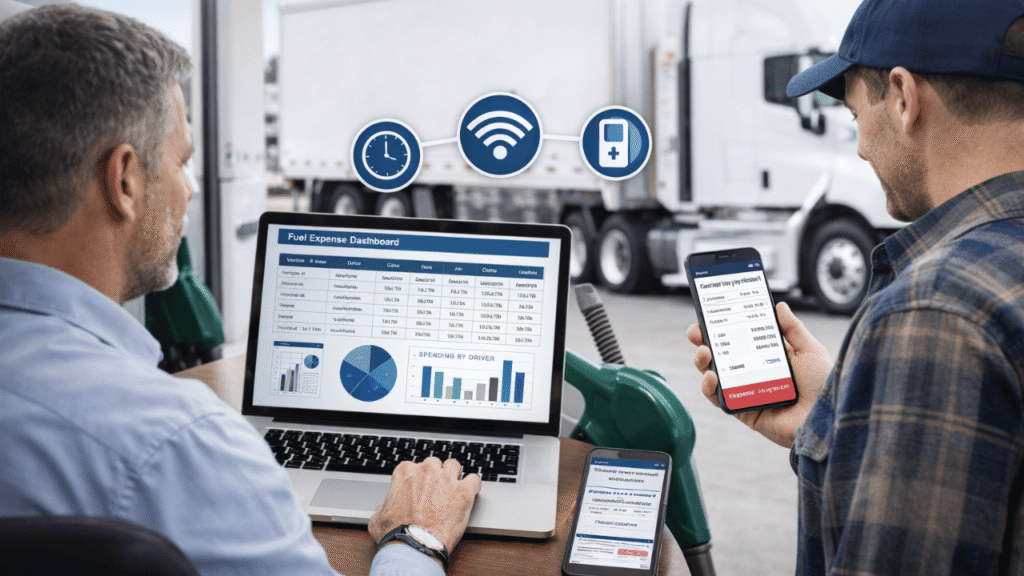
Fuel costs represent a major portion of operational expenses in the trucking industry. Without accurate data, fleets may struggle to understand where their fuel money is going or how efficiently it is being used. That’s why real-time fuel spend tracking has become an essential tool for modern fleet management.
With real-time fuel spend tracking, fleet managers can monitor fuel purchases, identify unusual spending patterns, and make faster, more informed decisions about fuel management. Instead of waiting for monthly reports, companies gain immediate insights into fueling activity across their entire fleet.
In this article, we’ll explore how real-time fuel spend tracking works, why it matters for trucking operations, and how fleets can use this technology to improve efficiency and reduce costs.
Table of Contents
Real-Time Fuel Spend Tracking for Fleet Managers
For fleet managers, having instant visibility into fuel purchases can make a significant difference in controlling expenses. Real-time fuel spend tracking allows companies to view fueling transactions as they occur, providing a clearer picture of how fuel budgets are being used.
What Is Real-Time Fuel Tracking?
Real-time fuel tracking refers to systems that record and display fuel transactions immediately after they occur. These systems are often connected to fuel cards, telematics platforms, or integrated fuel monitoring systems.
When a driver purchases diesel, the system automatically records details such as:
- Purchase location
- Time of the transaction
- Fuel quantity purchased
- Driver or vehicle identification
This data becomes available instantly, giving fleet managers immediate visibility into fleet activity.
Improving Decision-Making With Fleet Fuel Analytics
Access to fleet fuel analytics helps managers evaluate fueling behavior and identify trends in diesel spending.
For example, analytics dashboards can show:
- Total fuel spending by vehicle
- Average fuel cost per trip
- High-cost fueling locations
- Fuel consumption trends across routes
With these insights, fleets can make more informed decisions about route planning and fuel purchasing strategies.
Benefits of Real-Time Fuel Spend Tracking for Fleets
Understanding the benefits of real-time fuel spend tracking for fleets helps companies see how this technology supports better operational control.
Stronger Diesel Cost Monitoring
One of the most important advantages of real-time fuel spend tracking is improved diesel cost monitoring. By viewing fuel purchases in real time, fleet managers can quickly identify transactions that exceed normal spending patterns.
For example, if a driver fuels at an unusually expensive station or makes multiple purchases within a short period, managers can investigate immediately.
This level of oversight helps fleets maintain better control over fuel budgets.
Faster Detection of Fuel Irregularities
Without real-time tracking, unusual transactions might not be noticed until weekly or monthly reports are reviewed. Real-time systems reduce this delay by highlighting suspicious transactions as they occur. Early detection allows companies to address potential issues quickly, preventing unnecessary fuel expenses.
Improved Budget Planning
Access to real-time fuel data allows fleets to analyze spending patterns and forecast future costs more accurately. Companies can use this information to adjust routes, select preferred fueling stations, or negotiate better fuel pricing with partners.
How Real-Time Fuel Tracking Improves Fleet Management
Learning how real-time fuel tracking improves fleet management reveals why many transportation companies are adopting these systems.
Better Fuel Monitoring Systems
Advanced fuel monitoring systems combine fuel card data with fleet management tools to provide a comprehensive overview of fuel activity. These systems allow managers to monitor fuel purchases, vehicle performance, and route efficiency in one platform.
By connecting fuel data with operational data, fleets gain deeper insights into their overall performance.
Increased Fuel Spending Visibility
Real-time reporting significantly improves visibility into fuel spending. Instead of waiting for accounting reports, fleet managers can review fuel purchases immediately. This transparency helps companies understand exactly how their fuel budget is being used across different drivers and vehicles.
Valuable Trucking Fuel Data Insights
Modern reporting platforms also provide insights into trucking fuel data that help fleets optimize operations.
For example, analyzing fuel data can reveal:
- Which routes consume the most fuel
- Which drivers maintain the best fuel efficiency
- Where fuel prices are consistently higher
These insights allow fleets to refine their fueling strategies and reduce overall operating costs.
Additional Advantages of Real-Time Fuel Data
While many fleets adopt real-time systems for fuel tracking, the benefits extend beyond simple monitoring.
Improved Accountability
Drivers are more likely to follow fueling policies when they know purchases are tracked instantly. This encourages responsible fuel usage and reduces the likelihood of misuse.
Faster Administrative Processes
Real-time fuel data also simplifies accounting tasks. Instead of collecting receipts and manually entering fuel transactions, accounting teams can automatically access digital records.
This reduces administrative workload and improves reporting accuracy.
Smarter Operational Planning
Real-time insights allow fleets to make proactive decisions rather than reacting to problems after they occur.
By identifying trends early, companies can adjust routes, optimize fueling locations, and improve vehicle efficiency.
Why Real-Time Fuel Tracking Is Essential for Modern Fleets
The trucking industry relies heavily on fuel, making cost control a top priority for fleet operators. Real-time fuel spend tracking provides the transparency and data insights needed to manage fuel expenses effectively.
With instant access to transaction data, fleets can monitor spending, detect irregularities, and improve operational efficiency. These capabilities make real-time fuel tracking an essential component of modern fleet management systems.
Related Article: How to Choose the Best Fuel Card for Your Fleet
Gain Better Control Over Your Fuel Spending
Managing fuel costs requires accurate data and timely insights. By implementing real-time fuel spend tracking, fleets can monitor fuel purchases in real time, improve spending visibility, and make smarter operational decisions. With better fuel monitoring systems and data analytics, trucking companies can reduce fuel expenses while improving overall fleet performance.
Looking for Advanced Fuel Tracking Tools?
Visit getfuelcard.com, call +1 (905) 901-1601, or email hello@getfuelcard.com to explore fuel card solutions designed to provide real-time fuel tracking, spending insights, and improved fuel management for trucking fleets and owner-operators.