
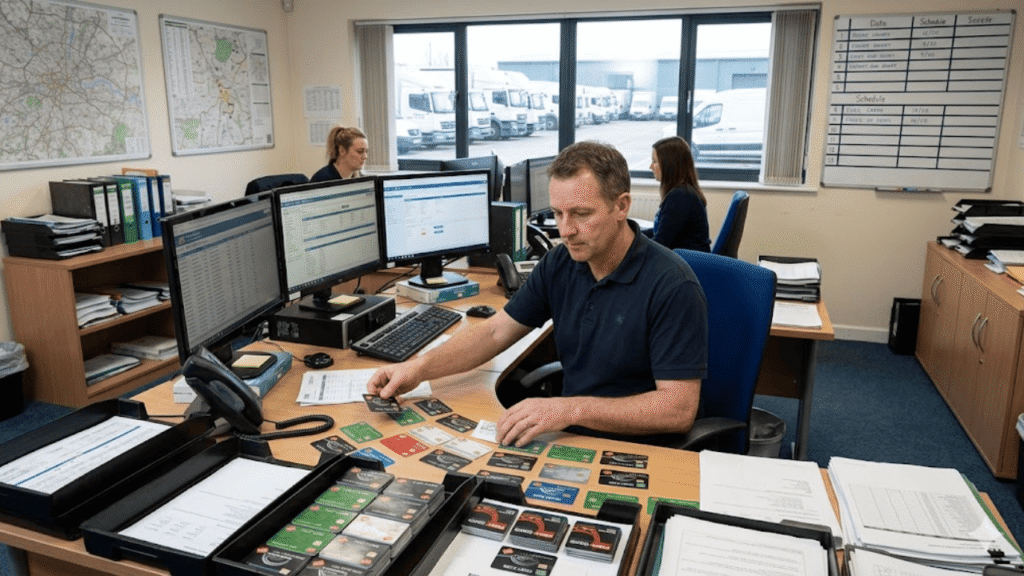
Managing fuel expenses is one of the biggest challenges for transportation companies. Diesel costs fluctuate frequently, and tracking fuel purchases across multiple vehicles can quickly become complicated. That’s why many fleet operators rely on fleet fuel cards to simplify fuel payments and gain better control over fuel spending.
Unlike traditional payment methods, fleet fuel cards are designed specifically for transportation businesses. They allow managers to monitor fuel transactions, track driver activity, and access detailed fuel reports in real time.
For companies operating multiple trucks, fleet fuel cards provide tools that make fuel management more organized and efficient. In this article, we’ll explore why fleet managers depend on fuel cards and how they support better fleet operations.
Table of Contents
Fleet Fuel Cards for Modern Fleet Management
Today, trucking companies use fleet fuel cards to improve fleet fuel management. These cards allow drivers to purchase fuel at approved stations while automatically recording transaction details.
What Are Fleet Fuel Cards?
Fleet fuel cards are specialized payment cards issued to drivers or vehicles for purchasing fuel. Unlike regular credit cards, they include features tailored for trucking operations.
These features typically include:
- Fuel purchase tracking
- Spending limits per driver or vehicle
- Fuel transaction alerts
- Centralized fuel reporting tools
With these capabilities, fleet fuel cards help managers monitor fuel spending without relying on manual recordkeeping.
Why Fuel Cards Improve Fuel Management
Managing fuel expenses manually often requires collecting receipts, verifying purchases, and entering data into accounting systems.
Fuel cards automate this process. Every transaction is recorded digitally, giving managers immediate visibility into fleet fueling activity. This level of transparency significantly improves fleet fuel management.
Why Fleet Managers Use Fuel Cards
Understanding why fleet managers use fuel cards helps highlight the operational advantages they bring to transportation companies.
Simplified Fleet Expense Tracking
One of the biggest advantages of fleet fuel cards is improved fleet expense tracking. Instead of collecting paper receipts from drivers, companies can access digital reports showing every fuel transaction.
These reports typically include:
- Date and time of purchase
- Fuel quantity purchased
- Fueling location
- Driver or vehicle identification
Having this information readily available simplifies accounting processes and improves financial accuracy.
Reliable Trucking Fuel Payment Solutions
Fuel cards also serve as reliable solutions for trucking fuel payments. Drivers can refuel quickly at participating stations without carrying cash or personal credit cards. This convenience helps keep drivers focused on their routes while ensuring that all fuel purchases are properly documented.
Additionally, many fuel card programs offer access to large fueling networks, allowing drivers to refuel easily along major transportation routes.
Benefits of Fuel Cards for Fleet Managers
Exploring the benefits of fuel cards for fleet managers reveals why these tools are widely used across the trucking industry.
Clear Fuel Card Benefits for Fleets
There are several important fuel card benefits for fleets, including improved visibility into fuel spending and stronger financial oversight.
Fuel cards help fleets:
- Track fuel purchases automatically
- Monitor driver fueling behavior
- Set spending limits to prevent misuse
- Generate detailed fuel reports
These benefits enable managers to control diesel expenses better while improving operational efficiency.
Access to Fleet Fuel Monitoring Tools
Modern fuel card platforms often include advanced fleet fuel monitoring tools that provide insights into fuel usage patterns.
For example, managers can analyze reports showing:
- Fuel consumption per vehicle
- Fuel spending by route
- High-cost fueling locations
These insights help fleets identify opportunities to reduce fuel costs and improve route planning.
Additional Operational Advantages
Beyond basic payment functionality, fleet fuel cards offer operational advantages that improve daily fleet management.
Improved Accountability
Because every fuel purchase is recorded digitally, drivers become more accountable for their fueling habits. Managers can review reports to ensure drivers are following company fueling policies.
Reduced Administrative Work
Fuel card reporting systems reduce the need for manual data entry and receipt management. Accounting teams can generate expense reports quickly without sorting through paperwork.
Better Cost Control
By analyzing fuel data, fleet managers can identify trends and adjust fueling strategies to reduce costs.
For example, fleets may encourage drivers to refuel at stations offering lower diesel prices or adjust routes to improve fuel efficiency.
Why Fleet Fuel Cards Are Essential for Growing Fleets
As transportation companies expand, managing fuel expenses becomes more complex. Fleet fuel cards provide the structure and visibility needed to handle fuel purchases across multiple drivers and vehicles.
With digital transaction tracking, detailed reporting tools, and improved spending controls, these cards help fleets operate more efficiently.
For many transportation companies, adopting fleet fuel cards is one of the most effective ways to simplify fuel management and maintain better control over operating costs.
Improve Your Fleet Fuel Management Today
Fuel costs are a major part of running a trucking business. By using fleet fuel cards, fleet managers gain access to tools that simplify payments, improve expense tracking, and provide valuable insights into fuel usage.
These benefits help companies maintain stronger financial oversight while keeping drivers productive on the road.
Looking for Fuel Card Solutions for Your Fleet?
Visit getfuelcard.com, call +1 (905) 901-1601, or email hello@getfuelcard.com to explore fuel card programs designed to help fleets monitor fuel purchases, access diesel discounts, and simplify fuel management across their operations.