
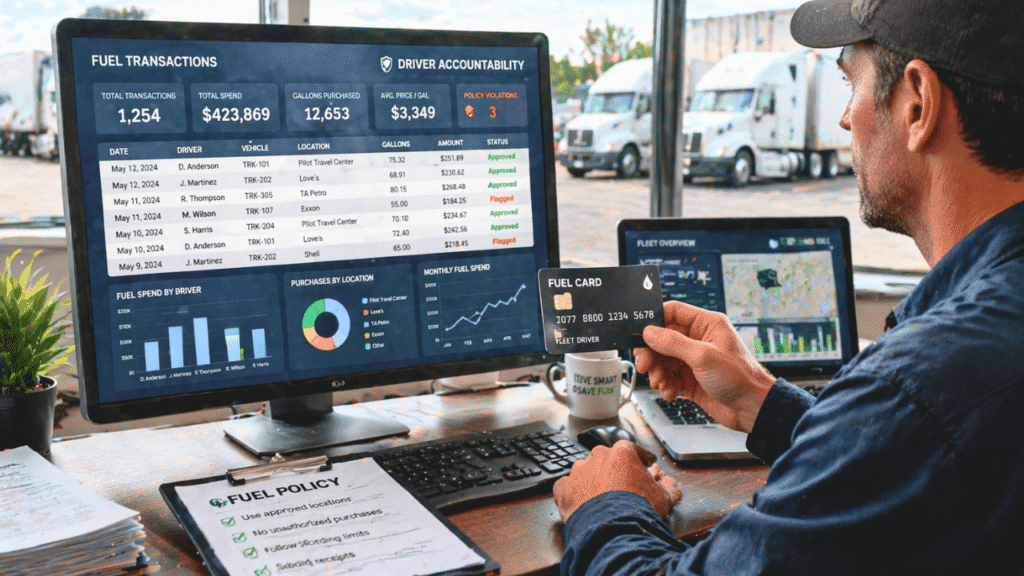
Running a fleet means trusting your drivers with company money every single day. And without the right systems in place, it’s hard to show that you trust someone. Purchases that aren’t allowed, gas tanks that are too full, and missing receipts can all add up to more than you think. For instance, poorly managed fleets lose about 12% of their fuel costs to unauthorized purchases.
That really hurts your bottom line. And most of the time, it can be stopped.
Fuel cards give fleet managers the tools to build genuine driver accountability without micromanaging every move on the road. They make fuel spending transparent and data-driven. Drivers know exactly what they need to do, and managers have the information they need to make sure it happens every time.
Here are four things about fuel cards that directly affect driver accountability in your fleet.
Table of Contents
How Fuel Cards Increase Driver Accountability in Fleet Operations
Before we talk about the features, it’s important to understand why driver accountability matters beyond just stopping fraud. When drivers know that their actions are being watched and measured, they make better choices. This is true not only for how much gas they use but also for how they drive in general.
When drivers know their fuel use and driving habits are being monitored, they are more likely to follow the rules of the road and the company’s rules. This means better driving, fewer accidents, and lower insurance rates.
The difference between fleets that use fuel cards to pay for things and fleets that use them as a full fleet performance management system is that the culture has changed.
Real-Time Data for Instant Fleet Monitoring
Real-time data is one of the most valuable fuel card features for driver accountability. Every time a driver fills up, managers can see exactly what was purchased, when, where, and how much, no waiting for a monthly statement. Real-time alerts also flag spending that exceeds set limits or card use outside approved times and locations, making it easy to catch and address issues early before they become costly problems.
This visibility benefits both sides. When drivers know their purchases are being tracked in real time, they’re far less likely to push the boundaries of company policy. And when managers can monitor activity as it happens, they shift from reacting to problems to preventing them, which is exactly the kind of operation fuel card data helps you build.
Customized Spending Limits for Driver Compliance
One of the best ways that fuel cards help drivers be responsible is by letting them set their own spending limits. You can limit fueling by dollar amount, fuel type, fuel volume, time of day, day of week, or specific locations. This gives you full control while keeping purchase controls in line with your company’s actual fuel policy. Drivers rarely get turned down when limits are set to match how your fleet really works, unless something strange is going on.
When a card is used outside approved parameters, it creates an automatic audit trail, a clear record of what was attempted and when. This removes all ambiguity for drivers. They know exactly what’s allowed, and the card enforces it without any extra work from your team. That combination of clear expectations and automatic enforcement is one of the most effective ways to strengthen driver compliance without adding to your administrative workload.
Reporting and Analytics for Driver Performance Metrics
Reports and analytics reveal historical patterns that are important for holding drivers accountable, while real-time data shows what’s happening now. Fleet managers can identify inefficiencies and patterns in fuel use with new fuel cards that provide detailed reports on how much fuel each driver, vehicle, and route consumes. Using this data to create driver performance metrics makes training easier for managers, who can then deal with specific problems, set goals, and reward good behavior.
This method focuses on changing behavior instead of just punishing bad behavior, which makes the team more motivated. Automated fuel transaction logs also make accounting easier by reducing manual entry, allowing teams to focus on analyzing data.
Telematics Integration for Complete Fleet Supervision
When used with telematics systems, fuel cards make drivers more responsible. This kind of integration lets you compare fuel card use with GPS tracking in real time. This makes it easier to monitor driver behavior and detect unauthorized purchases. Telematics can flag a transaction right away if a driver fills up far from their route.
Additionally, telematics tracks metrics like speeding and idling, which lets fleet managers provide personalized feedback. The system also lets you change permissions on the fly based on the fuel tank’s level, which helps keep thieves out.
What Fleet Cards Do and How They Work
Before looking into how fleet cards make drivers more responsible, it’s helpful to know what they do. Most fleet fuel cards offer features useful to businesses that manage drivers and vehicles.
- Centralized Payment System — Fleet cards replace cash and credit cards with a single, safe payment system. You can assign each card to a driver or vehicle, and all cards are linked to a single account. This makes it easier to track expenses and reduces paperwork.
- Fuel Rebates and Discounts — Many fleet card programs offer cash back on gas, but the discounts may only apply to certain brands or networks.
- Purchase Controls — Fleet cards let managers set spending limits that can be adjusted to align with the company’s rules. Some common controls are limits on the amount of money that can be spent, the amount of fuel that can be bought, the number of transactions that can be made, the time of day and day of the week, the types of fuel that are allowed, the geographic limits, and the rules for the type of purchase, such as fuel-only or including parts and services.
- Fuel Expense Tracking — Every transaction is automatically recorded in a fleet card dashboard, no receipts, no expense reports. Managers get instant access to purchase details, including date, time, location, fuel volume, dollar amount, odometer reading, and driver ID.
- Detailed Reporting — Most providers include reporting and analytics tools that help managers spot spending patterns and identify areas for improvement.
These features form the foundation of fleet card functionality, and the backbone of driver accountability.
Build a Culture of Accountability, Not Just Compliance
The four features above work best when you make a bigger commitment to driver accountability across your fleet. Data, controls, and reporting can all help you reach that goal, but only if you set clear expectations first.
Drivers should know that fuel card data will be used to assess performance, not just to detect fraud. If you tell people that ahead of time, the tools won’t be used to spy on them; they’ll be a shared resource. If drivers know the benchmarks, they are more likely to meet them. People who don’t do well have clear conversations based on facts that help them get better.
That’s how fuel cards go from being a way to pay to becoming a way to make drivers more responsible, which is good for your whole business.
Want to make your fleet more accountable? Visit getfuelcard.com, call +1 (905) 901-1601, or email hello@getfuelcard.com to find out about fleet options and tools that can help you keep your business running smoothly, cut costs, and manage drivers.