
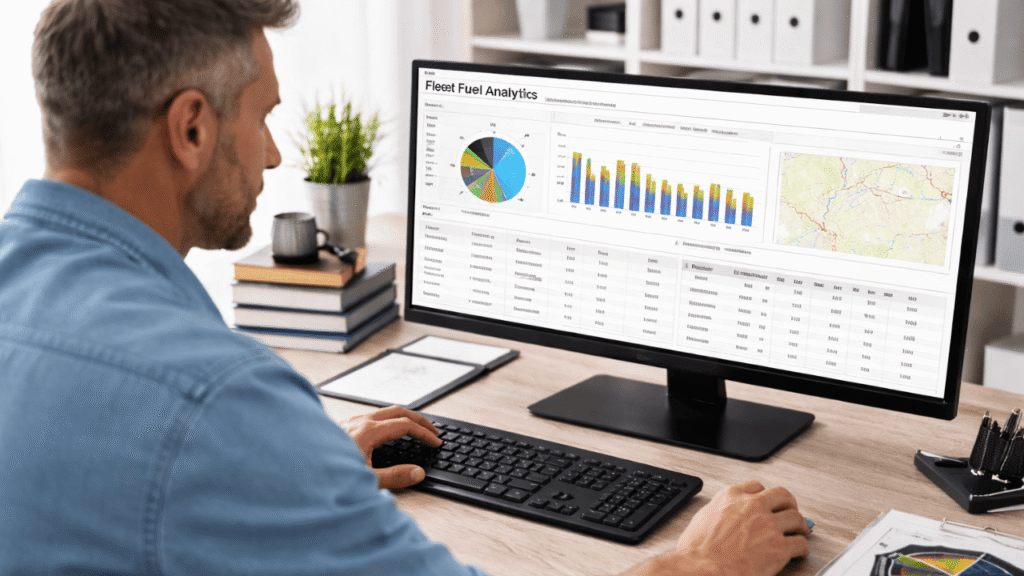
Fuel costs don’t just cut into your profits; they can also quietly cause problems for a fleet that is otherwise running well if no one is paying close attention. The amount of fuel your cars use isn’t always the problem. It’s because most fleets don’t have a clear enough picture of where, when, and why they’re using that fuel. Fleet fuel analytics tools are made to fix that problem.
These tools turn raw fuel data into useful information that tells you which vehicles aren’t performing well, which drivers are wasting too much time, and where your budget is going. If you don’t have them, you’re basically flying blind when it comes to one of your highest costs.
Table of Contents
What Are Fleet Fuel Analytics Tools?
Fleet management systems have come a long way, from simple spreadsheets that tracked fuel use to software that analyzes fuel use. These systems keep collecting data on vehicles, which lets fleet managers look for patterns and find ways to make things run more smoothly.
Fleet fuel analytics tools are software platforms (sometimes with hardware) that gather, sort, and analyze fuel data from all parts of your business. They integrate with fuel cards, GPS systems, telematics devices, and Electronic Logging Devices (ELDs) to show you how much fuel every vehicle and driver in your fleet uses.
The goal is simple: use data instead of guesswork to make better choices about how much gas to buy, how drivers behave, and how well routes work.
How Fleet Fuel Analytics Tools Work
Fleet data analytics is the process of collecting and analyzing information from vehicles and operations, such as GPS location and fuel consumption metrics, to get a better idea of how well things are working.
The basic flow is that telematics devices in your cars constantly collect data about things like engine activity, fuel levels, location, idling time, and speed. Your analytics platform gets that data and compares it to fuel card transactions and trip records. The result is a single dashboard that shows how fuel-efficient each vehicle, driver, route, and time period is.
These systems make it easier to see how much fuel is being used, find problems like idling, and help with compliance reporting by combining fuel data with telematics, GPS, and fleet management software. Most platforms also make automatic reports and send alerts when something seems wrong, like a transaction that doesn’t match the vehicle’s location or a driver whose fuel use has suddenly gone up.
Key Features to Look For in Fuel Analytics Software
Not all platforms are the same. Here’s what really matters when you’re looking at fleet fuel analytics tools for keeping an eye on fuel use in real time:
- Real-time tracking and alerts — Some of the most important features are real-time monitoring and reporting, integration with GPS and fleet management software, fuel card management, customizable alerts for unusual activity or consumption, and analytics for trend analysis and forecasting.
- Driver behavior monitoring — Going too fast, slamming on the brakes, and idling for too long all waste gas. Analytics tools show these patterns by driver, so you can coach people instead of changing policies for everyone.
- Idling time reporting — Up to 40% of fuel costs can come from idling and most fleets are shocked when they see their real idle data for the first time. Finding drivers or routes that are idle most of the time is often one of the quickest ways to win.
- Fuel card integration for data-driven fleet decisions — Fuel card integration software works with a lot of different card providers. It also works with fleet management software to give you accurate vehicle tracking and advanced fleet analytics. Simply, Fleet, this mix stops fraud, checks purchases, and makes sure that every gallon is accounted for.
- Trend analysis and benchmarking — AI-driven analytics can look at big data sets and automatically find fleets that are similar. This lets fleet managers make internal benchmarks and compare their performance to similar operations, with reports on fuel efficiency by vehicle, route, and location.
Popular Fleet Fuel Analytics Platforms
Modern fuel management software combines telematics, fuel card programs, and cloud-based analytics to give fleet managers a full picture of how much fuel is being used. Fleet fuel costs are still one of the highest costs of running a transportation business, often making up 30% or more of the total budget.
A few platforms you should know about are:
- Fleetio is widely considered the best overall choice for integration and IFTA reporting. Its prices start at about $4 per vehicle per month and can be scaled up.
- Geotab has deep telematics-based analytics and a lot of third-party integrations. This is great for fleets that need detailed data and custom reports.
- Motive has AI-powered driver coaching and fuel tracking, making it a great choice for fleets that want to change how their drivers behave to save fuel.
- Samsara focuses on GPS tracking, with detailed reports on idling and route efficiency.
Each platform has its pros and cons. The best one for you will depend on the size of your fleet, the technology you already have, and whether you want fuel cards, on-site fueling, or both.
Why Fleet Fuel Analytics Tools Are Worth the Investment
There are many ways that fleet fuel analytics tools pay off. The most direct way is to spend less on fuel by planning routes better and training drivers. But analytics also helps with predictive maintenance, which means finding vehicles that are using more fuel than normal before they break down. This makes assets last longer and lowers the cost of repairs that weren’t planned.
Fleet analytics uses a lot of data to find ways to save money by finding areas where things aren’t working as well as they should. For example, it keeps track of fuel use, maintenance patterns, and driver performance so that it can suggest specific ways to cut costs.
There’s also the compliance side of things. Cloud-based fuel analytics platforms make it easier to report and keep track of compliance across multiple jurisdictions. This makes it easier for fleets that operate across state lines to be ready for an audit.
Start Cutting Fuel Costs With the Right Analytics Tools Today
If fuel is one of your highest costs of doing business, and for most fleets, it is, then managing it without special fleet fuel analytics tools is like running a business without checking your bank account. The information is already there every time your drivers get in their cars. The right analytics platform makes it easier to use.
Begin with real-time tracking, add your fuel cards, and then grow from there. The money you save in the first quarter alone will be enough to pay for the investment.
Visit getfuelcard.com, call +1 (905) 901-1601, or email hello@getfuelcard.com to learn how fuel card solutions can help your fleet improve fuel tracking, reduce unnecessary expenses, and support smarter fleet management.